
Plan your winter at Crescent Spur. Book Now
The safety of our guests and staff is always our top priority. It guides our preparation, training and decisions in the mountains.
Since our first ski season in 1992, we have built our knowledge of the terrain, snow and weather in the Northern Rockies and Cariboo Mountains. That experience informs our guides’ decisions about where and how we ski and snowboard.
Heli-skiing and snowboarding take place in a remote, uncontrolled mountain environment. They involve inherent risks, including serious injury or death. These risks cannot be eliminated, even with experienced guides, appropriate equipment and careful decisions.
Understanding the risks is an important part of preparing for your trip. Below, learn about our guides, equipment and training, how we work to manage risk, and your responsibilities when skiing or snowboarding with us.

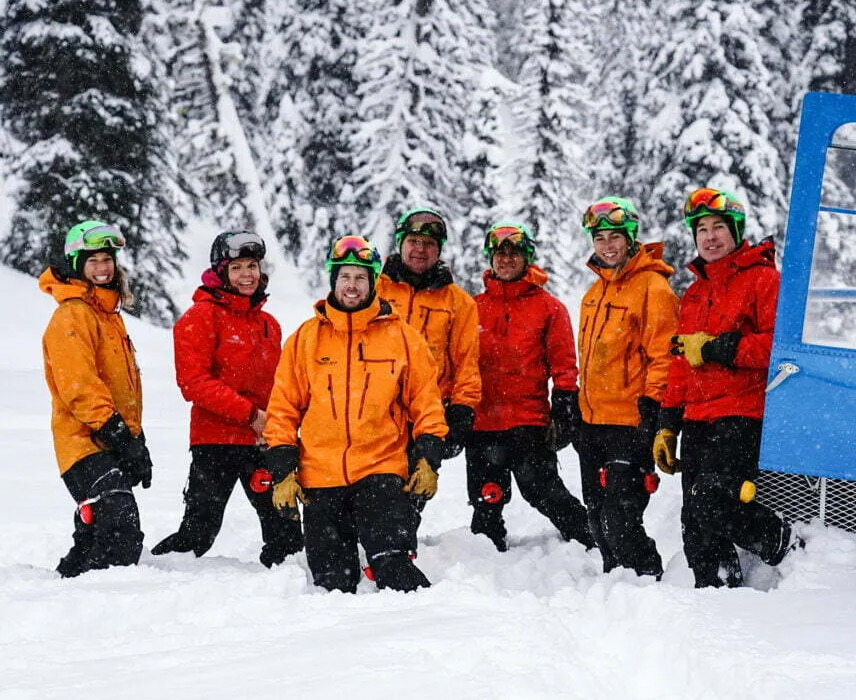
Our winter program hosts a maximum of 20 guests, skiing and snowboarding in two groups of up to 10. Every group is accompanied by two guides.
This arrangement supports communication, group management and attention to guests as they move through the terrain. Our guides assess conditions and make decisions about where and how the group travels.

HeliCat Canada represents helicopter and snowcat skiing operators in Canada and establishes operating standards, including the qualifications required for each guiding role. We follow those standards. Our guides bring experience in backcountry travel, avalanche assessment, wilderness first aid and mountain rescue.
Many members of our guiding team have worked at Crescent Spur for years. Regardless of seniority, every guide is encouraged to share observations and concerns in an open, non-judgmental environment. We select guides for both their qualifications and their ability to contribute to a collaborative team focused on sound decisions and consistent risk-management practices.
The terrain we ski and ride is neither groomed nor marked like a resort. Snow, weather and visibility can change throughout the day, and natural hazards may be difficult to recognize.
Hazards include, but are not limited to:
Our remote location also means that medical assistance and evacuation may be delayed by weather, flying conditions or other circumstances.
Guiding, training and equipment help manage risk, but they do not eliminate it or guarantee your safety. Understanding the hazards and following your guides’ instructions are essential parts of participating.
Please review the Safety & Risk Awareness information and our Release of Liability Waiver before booking.
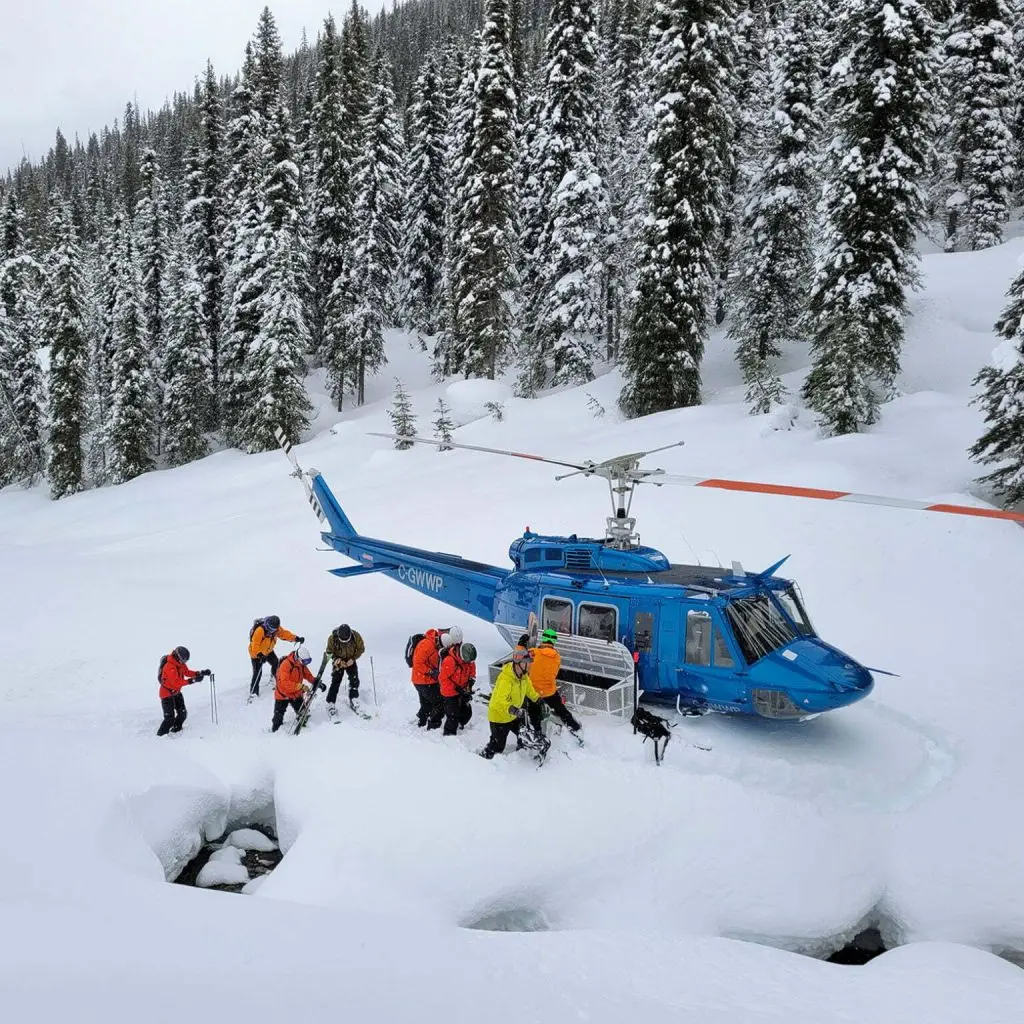
Your visit begins with a safety orientation covering the equipment you will carry and procedures for travelling in and around the helicopter. Instruction includes:
Ask questions about anything you do not understand. Whether this is your first heli-skiing trip or you have joined us many times, give the orientation your full attention.
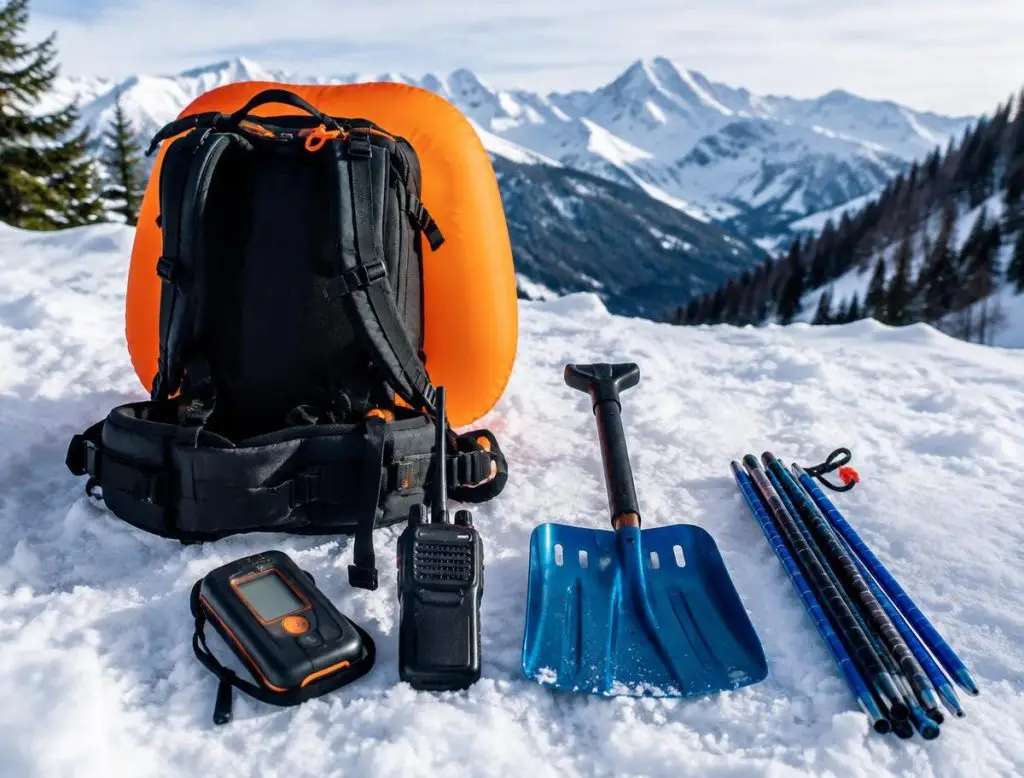
Every guest is provided with an avalanche airbag pack, avalanche transceiver, handheld radio, shovel and probe.

An avalanche airbag is designed to help reduce the likelihood of deep burial in certain avalanche situations. It does not prevent an avalanche or guarantee survival. Understanding its operation and limitations is important.

A transceiver can assist in locating someone buried in an avalanche who is wearing a functioning device in transmit mode. Knowing how to use it is an important part of emergency preparation.

Each guest carries a radio for communication with the guides and group. Your orientation explains its operation and the communication procedures to follow.

A probe is used to help pinpoint a buried person’s location, and a shovel is used to excavate the snow. These tools form part of the equipment carried for avalanche companion rescue.
Rescue equipment does not guarantee a successful rescue. It is never a substitute for careful terrain choices or following instructions.
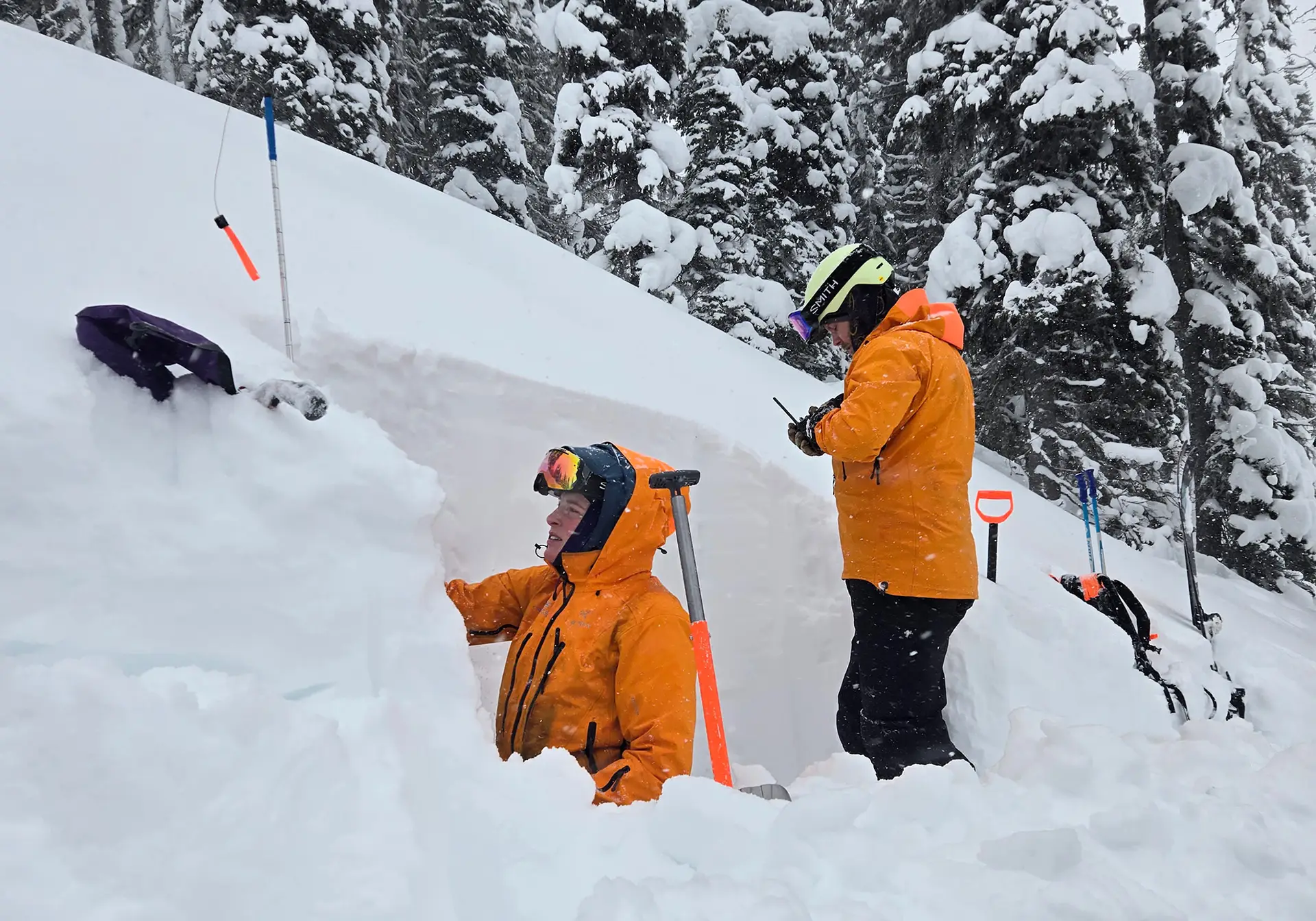
Each day begins with a guide meeting focused on two questions: what hazards exist, and where are they present? The team develops its daily hazard evaluation using:
The evaluation may change throughout the day as guides gather and share new information.
Each day begins with a guide meeting focused on two questions: what hazards exist, and where are they present? The team develops its daily hazard evaluation using:
The evaluation may change throughout the day as guides gather and share new information.
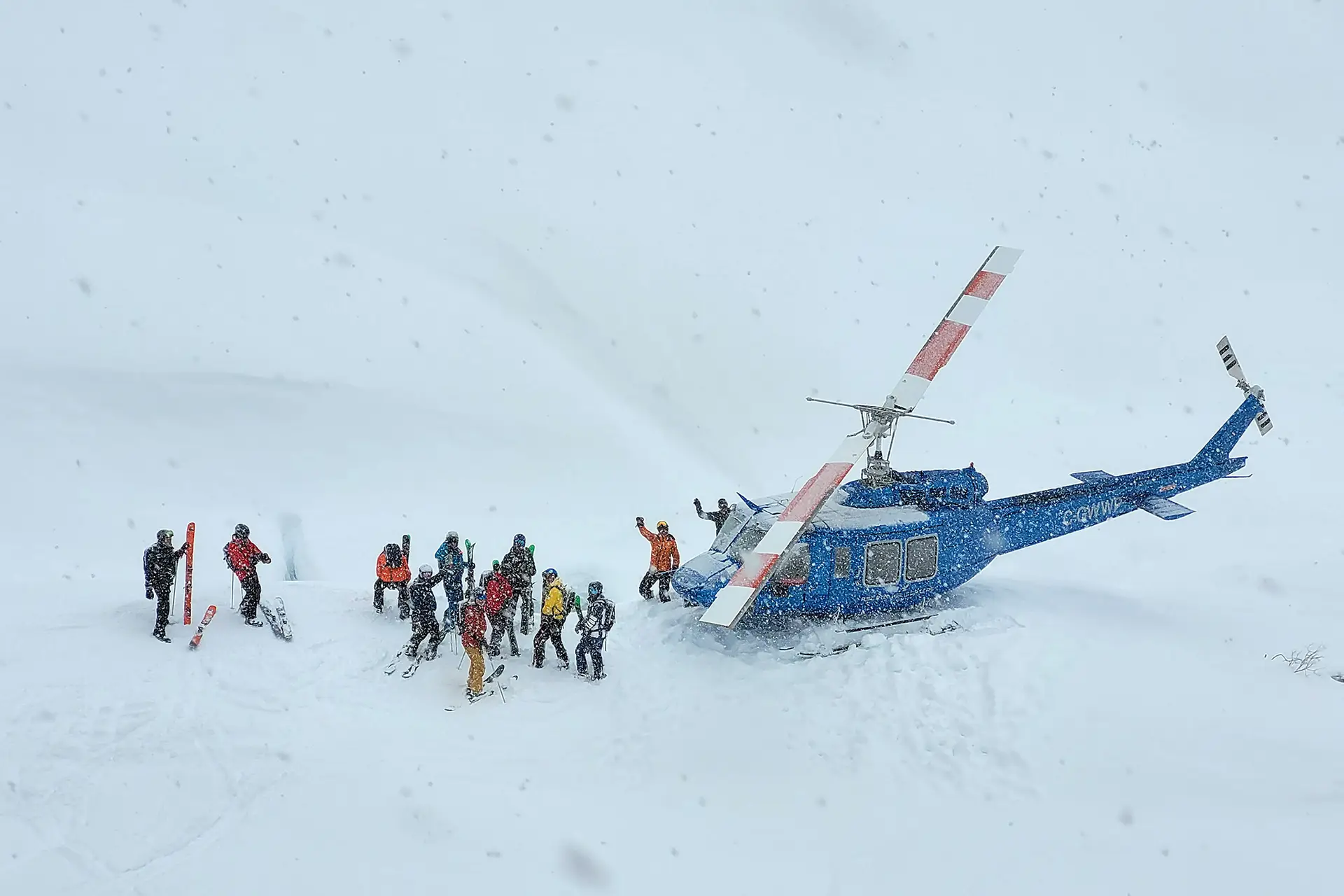
The team then decides where to travel and how to manage exposure to the identified hazards. A central part of this process is the daily run list, which identifies runs available for consideration and terrain features or areas to avoid.
Risk-management decisions involve professional judgment. The run list draws on industry decision-making tools, more than three decades of operating experience at Crescent Spur and the guiding team’s combined professional experience. Structured methods, evidence and open discussion help support more consistent decisions. Evidence collected and discussed in real time may change the plan throughout the day.
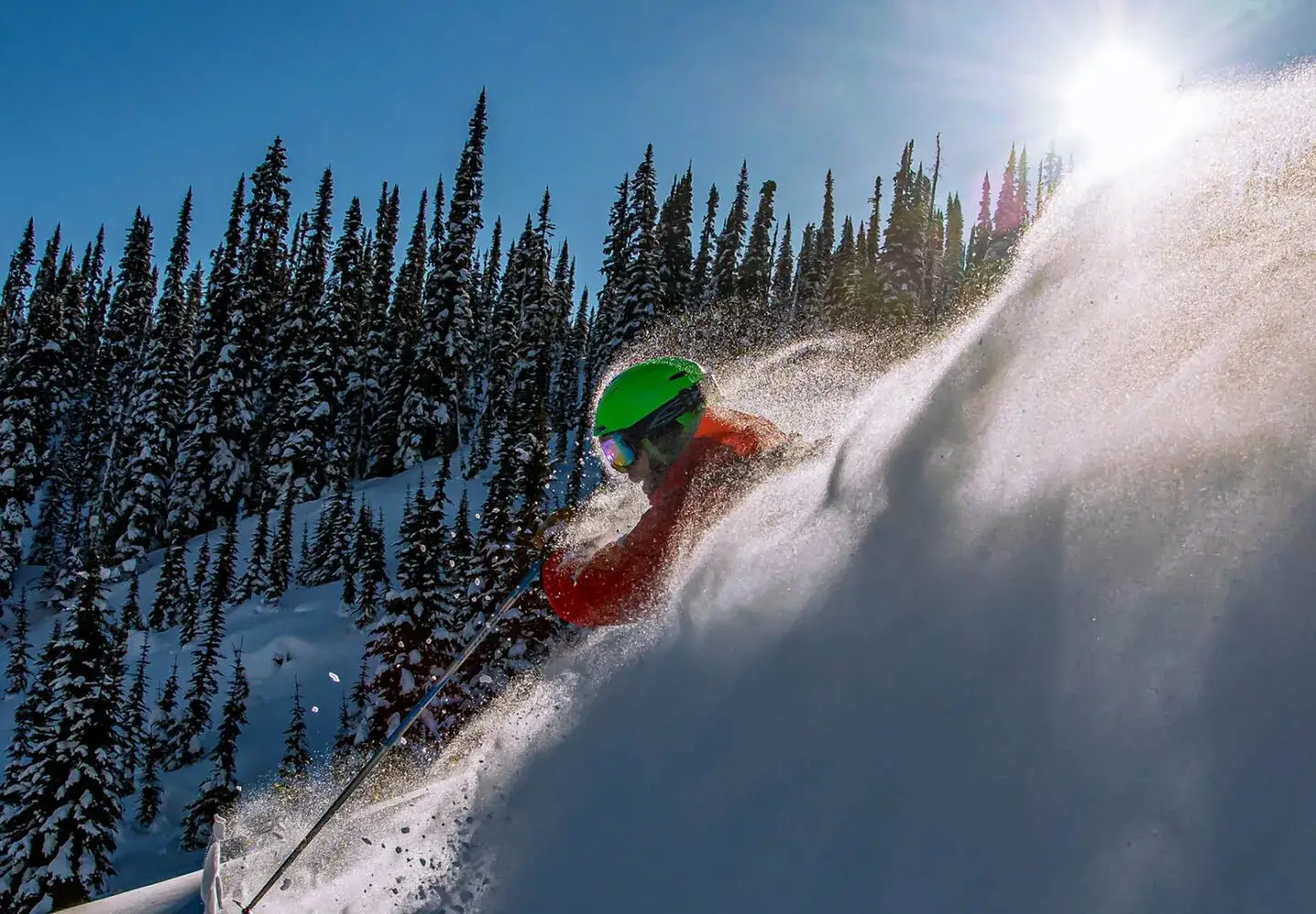
At the end of each day, the guides review their observations and update their understanding of the current hazards and season’s snowpack. Relevant information is recorded and shared with other avalanche professionals through InfoEx in a standardized format. Each guide also has an opportunity to reflect on the day and raise concerns in an open, non-judgmental environment.
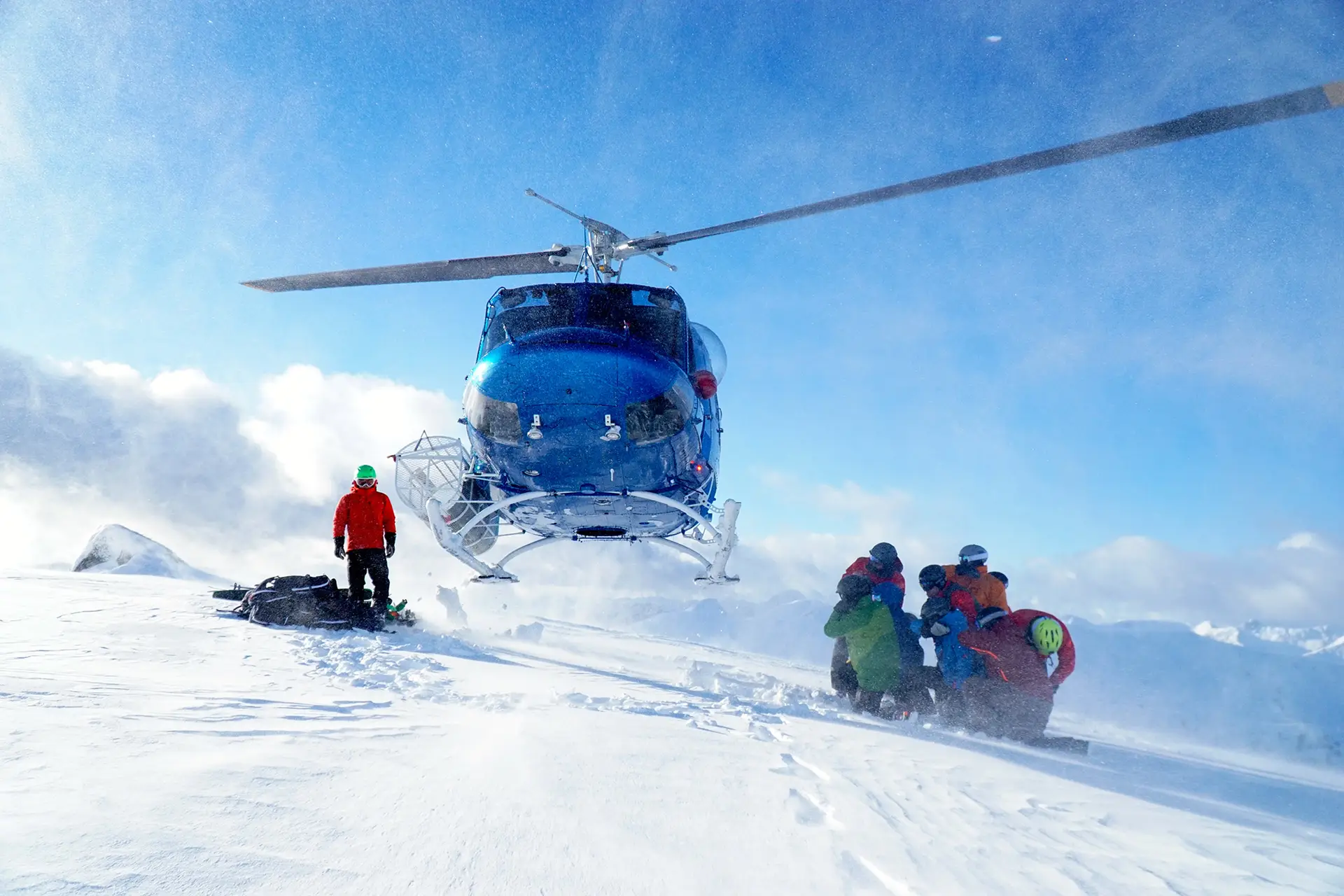
Our winter program uses a Bell 205 operated by Ascent Helicopters, carrying up to 10 guests and two guides per group, plus the pilot.
The helicopter is flown by experienced mountain pilots and maintained by licensed aircraft maintenance engineers. The pilots’ knowledge of the terrain and the demands of winter flying is an important part of our operation.
Throughout the day, pilots and guides stay in close communication, assessing weather, visibility and mountain conditions to inform decisions about where and when we fly and ski.
You will receive instructions for approaching, boarding and leaving the aircraft. Move only when directed and follow the procedures each time. If you are unsure what to do, stop and ask.
Your preparation and participation are important parts of managing risk. We ask you to:
We make every effort to keep families and friends in the same ski group. However, ability, fitness, pace and aviation requirements, including total passenger weight and helicopter performance limits, may require separate group assignments. Skiing together cannot be guaranteed.
Please speak with your guide about any concerns so we can explain the assignments and discuss possible adjustments.
We strongly recommend starting a training program at least 8 to 10 weeks before your arrival, focusing on strength, cardiovascular fitness and flexibility. Heli-skiing and snowboarding in deep snow, steep terrain and naturally gladed forests can be physically demanding. Arriving fit will help you manage fatigue and get more enjoyment from your holiday.
During your stay, let your guide know if you are feeling tired or need a break or rest day. Allowing time for recovery will help you enjoy the rest of your week.
If you are feeling unwell before your trip, please contact us before travelling. With guests and staff sharing meals and time together at the lodge, illness can spread and affect everyone’s week.
All payments made to Crescent Spur are non-refundable and are subject to our booking and cancellation terms. Please review these before booking.
We strongly recommend trip cancellation, interruption and emergency medical and evacuation insurance appropriate for your holiday.
Confirm directly with your insurer that your policy covers heli-skiing or heli-snowboarding and emergency evacuation. Understand the exclusions, limits and conditions that apply.
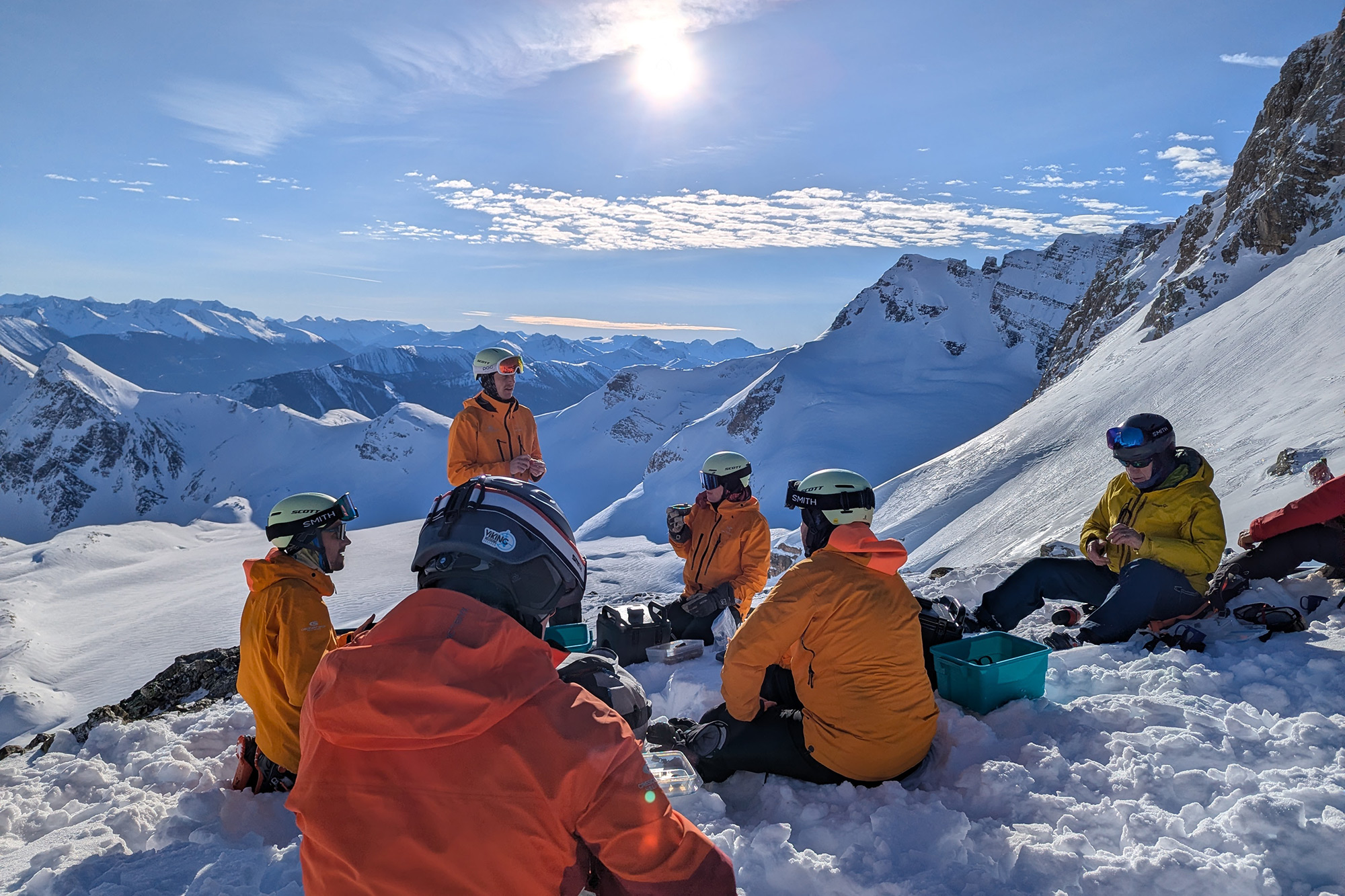
We welcome questions about the terrain, guiding, equipment, preparation or risks involved. An informed conversation is an important part of deciding whether a Crescent Spur trip is right for you.